40th Academy Awards · 1968
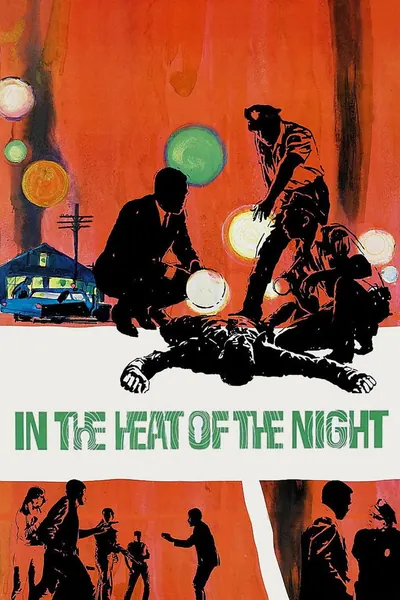
In the Heat of the Night
Directed by Norman Jewison
“They got a murder on their hands. They don’t know what to do with it.”
The story
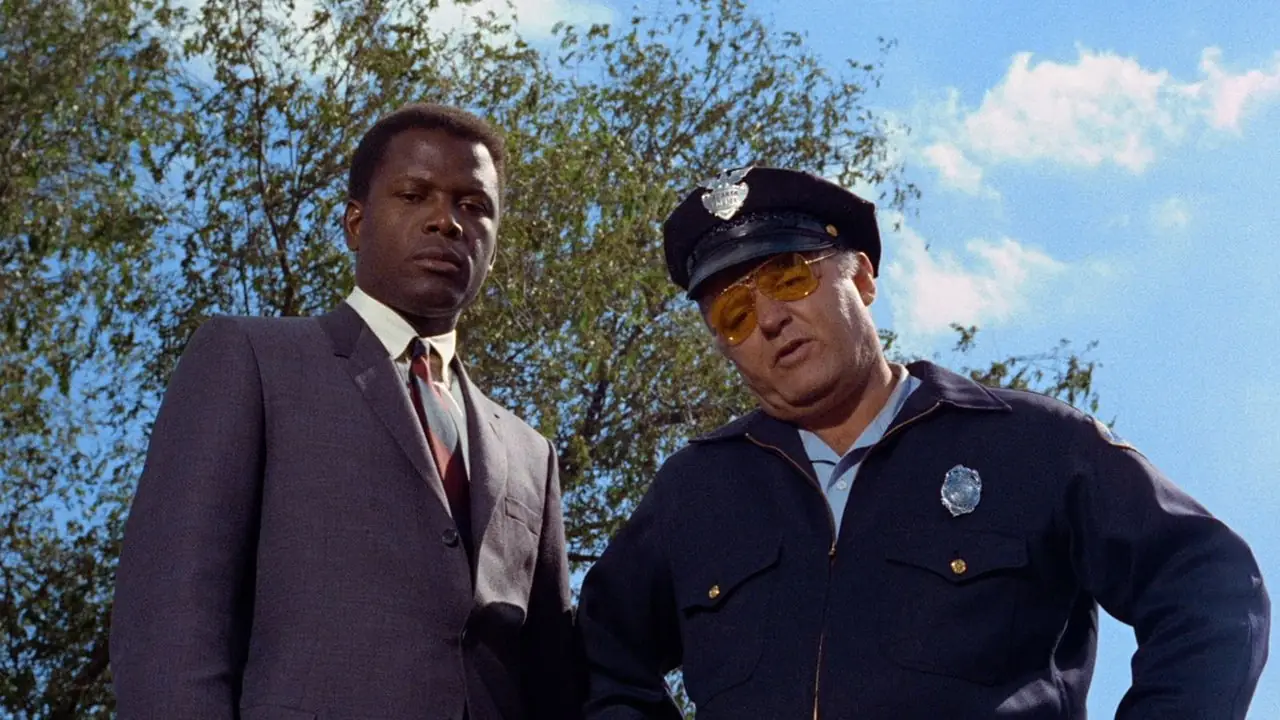
African-American Philadelphia police detective Virgil Tibbs is arrested on suspicion of murder by Bill Gillespie, the racist police chief of tiny Sparta, Mississippi. After Tibbs proves not only his own innocence but that of another man, he joins forces with Gillespie to track down the real killer. Their investigation takes them through every social level of the town, with Tibbs making enemies as well as unlikely friends as he hunts for the truth.
What critics & audiences say
 Tomatometer96%Fresh#17 of 98 winners
Famous lines
Gillespie: …What do they call you up there?
Tibbs: They call me Mr. Tibbs!
I got the motive which is money and the body which is dead!
Gillespie: There ain't no trains this time in the morning.
Tibbs: Tuesdays only 4:05 to Memphis.
Endicott: Well, what are you gonna do about it?
Gillespie: I don't know.
Endicott: I'll remember that. … There was a time... when I could've had you shot.
Gillespie: How much they pay you to do their police work?
Tibbs: A hundred and sixty-two dollars, and thirty-nine cents per week.
Gillespie: Boy, it would give me a world of satisfaction to horse whip you, Virgil.
Tibbs: My father used to say that. He even did a couple of times.
…There's white time in jail and there's colored time in jail. The worst kind of time you can do is colored time.
Because you're so damn smart. You're smarter than any white man. You're just gonna stay here and show us all.
I try to run a nice, clean, safe town here. A town where a man can sneeze and not get his brains beat out.
Gillespie: Whatcha hit him with?
Tibbs: Hit whom?
Gillespie: "Whom"? "Whom"? Well, you a Northern boy?
Quotes via Wikiquote
Fun facts
- Sidney Poitier said he agreed to make the film only with a guarantee that when Endicott slaps Tibbs, Tibbs slaps him right back, in every version of the movie; the counter-slap isn't in the novel.Wikipedia · Slapping scene
- During the film's run, Rod Steiger and Sidney Poitier would go to New York's Capitol Theatre to gauge the audience by listening for Black viewers cheering Tibbs's slap and white viewers whispering 'Oh!'Wikipedia · Reception
- Cinematographer Haskell Wexler adjusted his lighting to avoid glare on Poitier's complexion, making it the first major Hollywood color film lit with proper consideration for a Black actor.Wikipedia · Filming
- The film is set in Sparta, Mississippi, but was mostly shot in Sparta, Illinois; the town was renamed from the novel's fictional Wells, South Carolina so the crew could use existing signs and storefronts.Wikipedia · Filming
- The producers didn't realize Sparta, Mississippi was a real town, and the film's version, situated along Interstate 20, bears little resemblance to the real place, which is nowhere near an interstate.Wikipedia · Filming
- 'They call me Mister Tibbs!' ranked No. 16 on AFI's list of the top 100 movie quotes, became the title of the 1970 sequel, and was referenced by Pumbaa in The Lion King.Wikipedia · Reception
- At a San Francisco preview, Norman Jewison worried when young viewers laughed as if it were a comedy, until their stunned reaction to the slap convinced him the drama worked.Wikipedia · Reception
- Poitier had reservations about going south of the Mason–Dixon line, but Jewison shot part of the film in Dyersburg and Union City, Tennessee anyway.Wikipedia · Filming
- Quincy Jones composed the score, and the title song was sung by Ray Charles, with Glen Campbell and Billy Preston among the musicians on the soundtrack.Wikipedia · Music
- The film opened in August 1967 soon after race riots in Newark, Milwaukee and Detroit, and it later inspired a 1988–1995 TV series starring Carroll O'Connor as Gillespie.Wikipedia · Box office