4th Academy Awards · 1931 · 1930/31 season
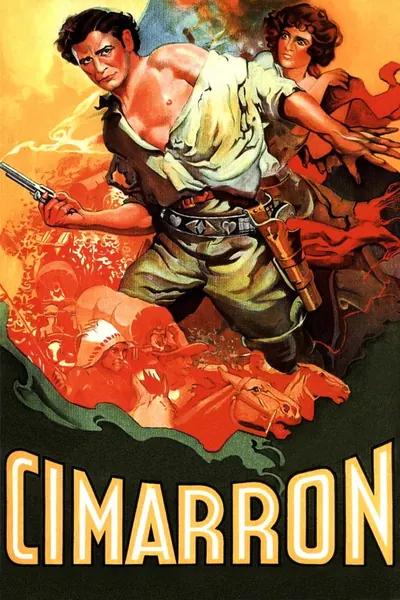
Cimarron
Directed by Wesley Ruggles
“Terrific as all creation!”
The story
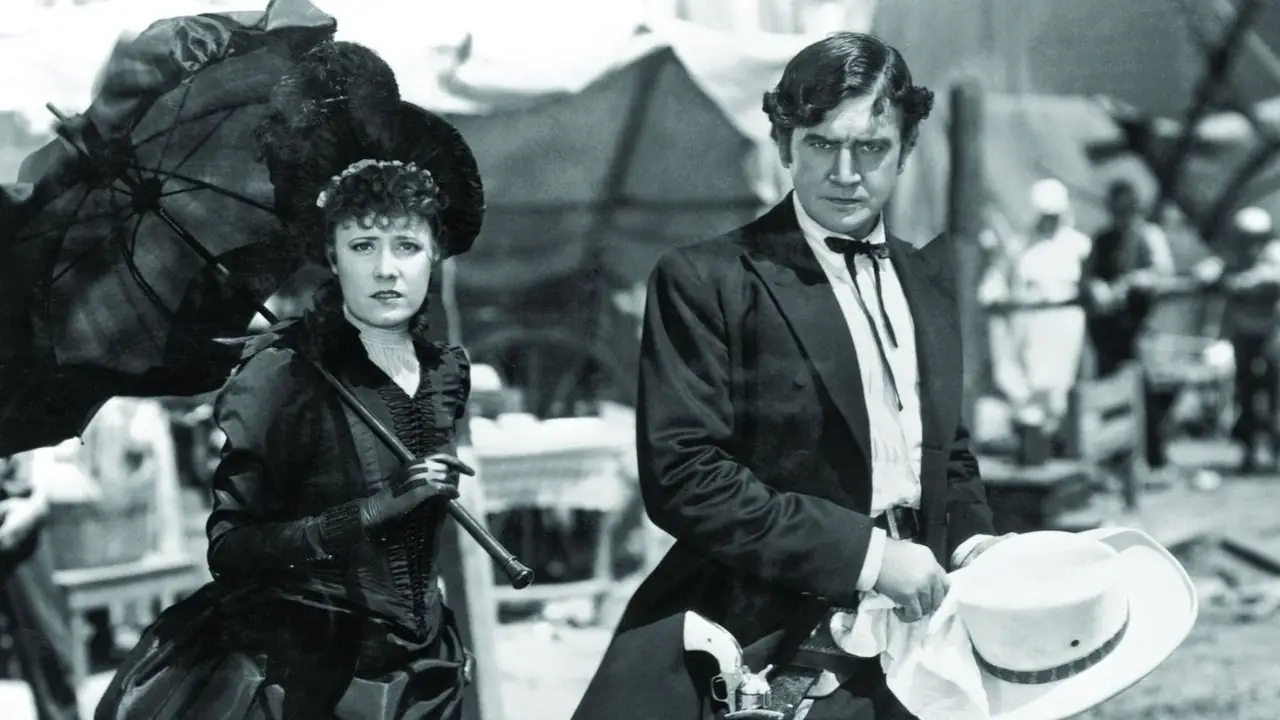
When the government opens up the Oklahoma territory for settlement, restless Yancey Cravat claims a plot of the free land for himself and moves his family there from Wichita. A newspaperman, lawyer, and just about everything else, Cravat soon becomes a leading citizen of the boom town of Osage. Once the town is established, however, he begins to feel confined once again, and heads for the Cherokee Strip, leaving his family behind. During this and other absences, his wife Sabra must learn to take care of herself and soon becomes prominent in her own right.
What critics & audiences say
 Tomatometer52%Rotten#96 of 98 winners
Famous lines
Sugar, if we all took root and squatted, there would never be any new country.
Mrs. Tracy Wyatt: One of my ancestors was a signer of the Declaration of Independence.
Sol Levy: That's all right. A relative of mine, a fellow named Moses, wrote the Ten Commandments.
Sabra: Did you have to kill him?
Yancy: No, I could have let him kill me.
We're goin' out to a brand new two-fisted, rip snortin' country full of Indians, rattlesnakes, gun toters and desperados. Whoopee!
…of whom it may actually be said that he is able to strut sitting down.
It's men like him that build the world. The rest of them, like me... why, we just come along and live in it.
There's loyalty, Sabra, that money can't buy.
I'd rather plead to a Texas jury than preach to this gang.
Never is a long time.
Quotes via Wikiquote
Fun facts
- Cimarron was the first Western to win Best Picture, and no other Western won until Dances With Wolves almost 60 years later, in 1990.Wikipedia · Introduction
- To capture the 1889 Oklahoma Land Rush, more than 28 cameramen filmed over 5,000 costumed extras, covered wagons, buckboards and bicyclists racing across the hills of the Quinn Ranch outside Los Angeles.Wikipedia · Production
- Despite winning Best Picture, Cimarron lost RKO $565,000. Its huge budget ran up against the Great Depression, though a 1935 re-release, premiered in Oklahoma City, recouped some of the money.Wikipedia · Release
- RKO bought 89 acres in Encino to build Max Rée's Oscar-winning sets for the boomtown of Osage. Those sets became the nucleus of RKO's movie ranch, where many later films were shot.Wikipedia · Production
- RKO invested more than $1.5 million in the film in the depths of the Depression, and it remained the studio's most expensive production until Gunga Din in 1939.Wikipedia · Production
- Cimarron was the first film to receive more than six Academy Award nominations and the first nominated for all of the 'Big Five' awards: Picture, Director, Actor, Actress and Writing.Wikipedia · Awards and honors
- Cimarron is one of only three films, with Who's Afraid of Virginia Woolf? and Sinners, to be nominated in every category it was eligible for.Wikipedia · Awards and honors
- Critically lauded in 1931, Cimarron is now, as James Berardinelli wrote in 2009, frequently cited on lists of the most undeserving Academy Award winners, criticized for racist overtones and scattershot storytelling.Wikipedia · Retrospective reviews
- The story spans forty years, from 1889 to 1929, and Variety singled out the quality of the make-up used to age the principal players across the decades.Wikipedia · Contemporary reviews
- Cimarron and The Best Years of Our Lives (1946) are the only Best Picture Oscars ever won by RKO.Wikipedia · Awards and honors